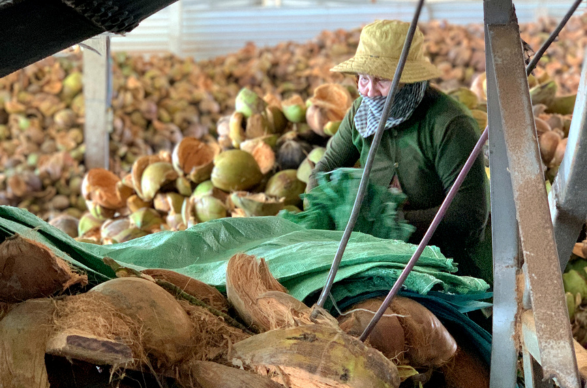


Explore Khmer palmyra palm culture in Tịnh Biên, An Giang — a slow, grounded alternative to classic Mekong Delta itineraries.
 admin
admin


Most travelers meet the Mekong Delta in motion. Boats at dawn. Floating markets unfolding on water. Fruit, voices, and engines moving all at once.
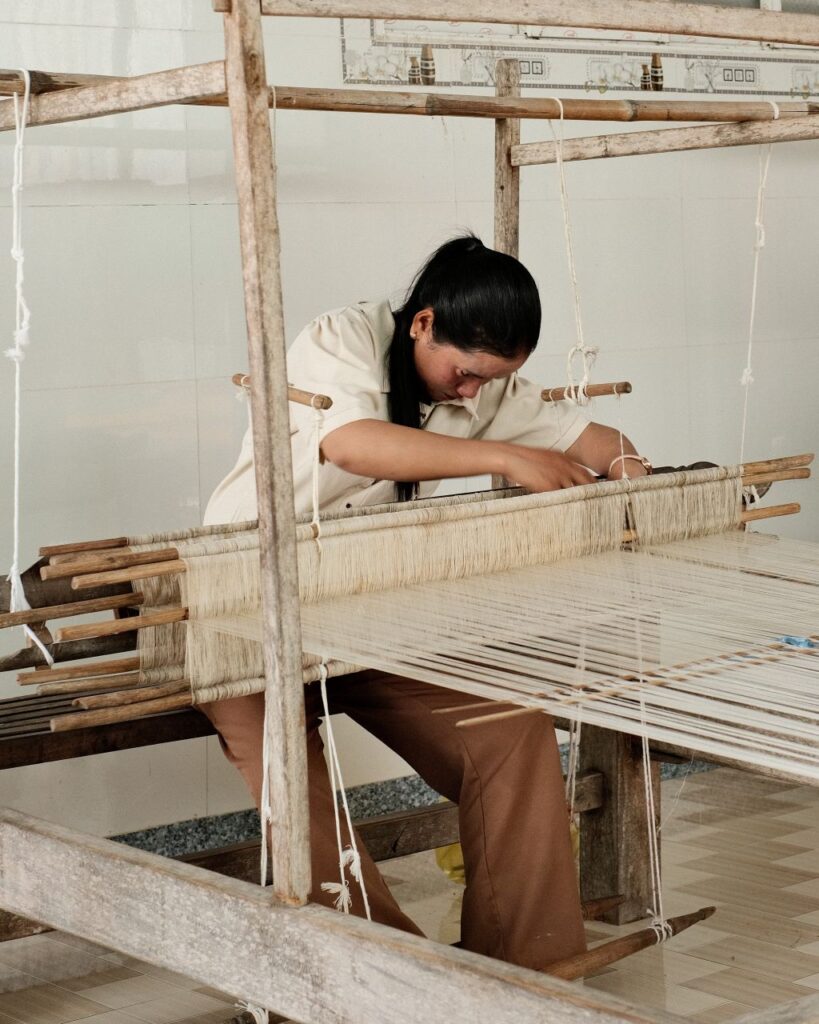
Tịnh Biên, in An Giang province, offers a different introduction, one shaped by land rather than river, by stillness rather than speed. Here, tall palmyra palms line quiet roads and fields, casting long shadows over Khmer villages where daily life follows an older rhythm. This is where Khmer palmyra palm culture continues not as a performance, but as a habit.
For travelers willing to slow down, Tịnh Biên reveals a quieter Mekong story.
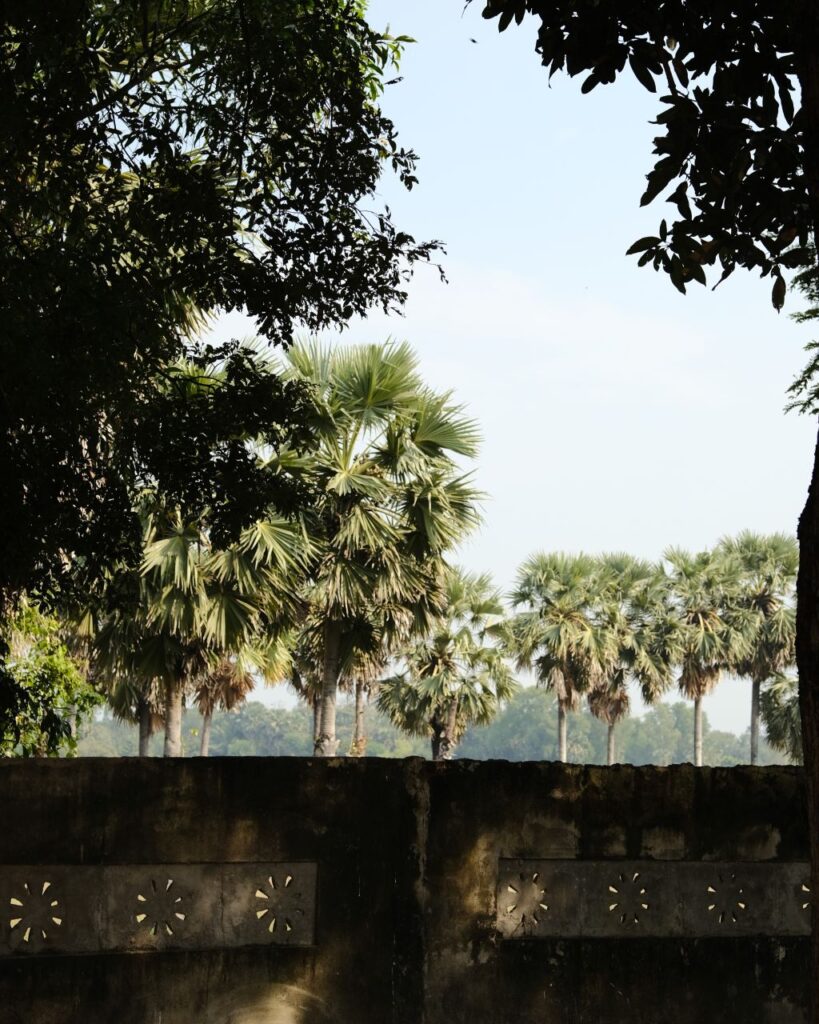
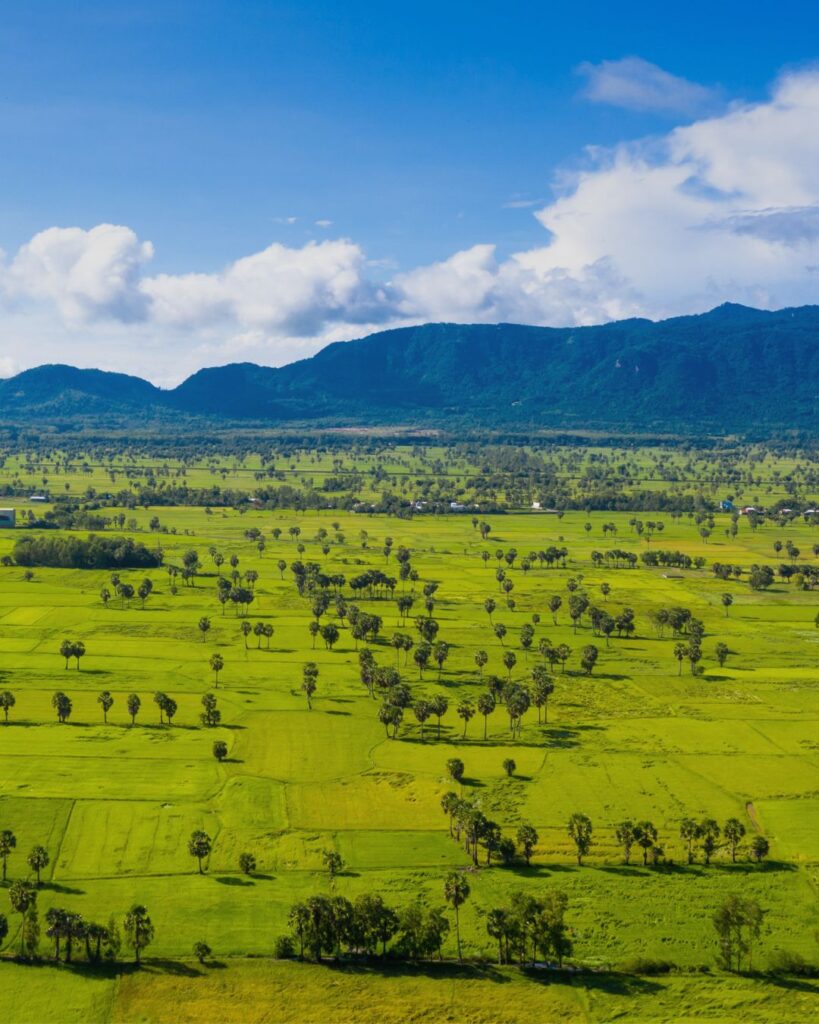
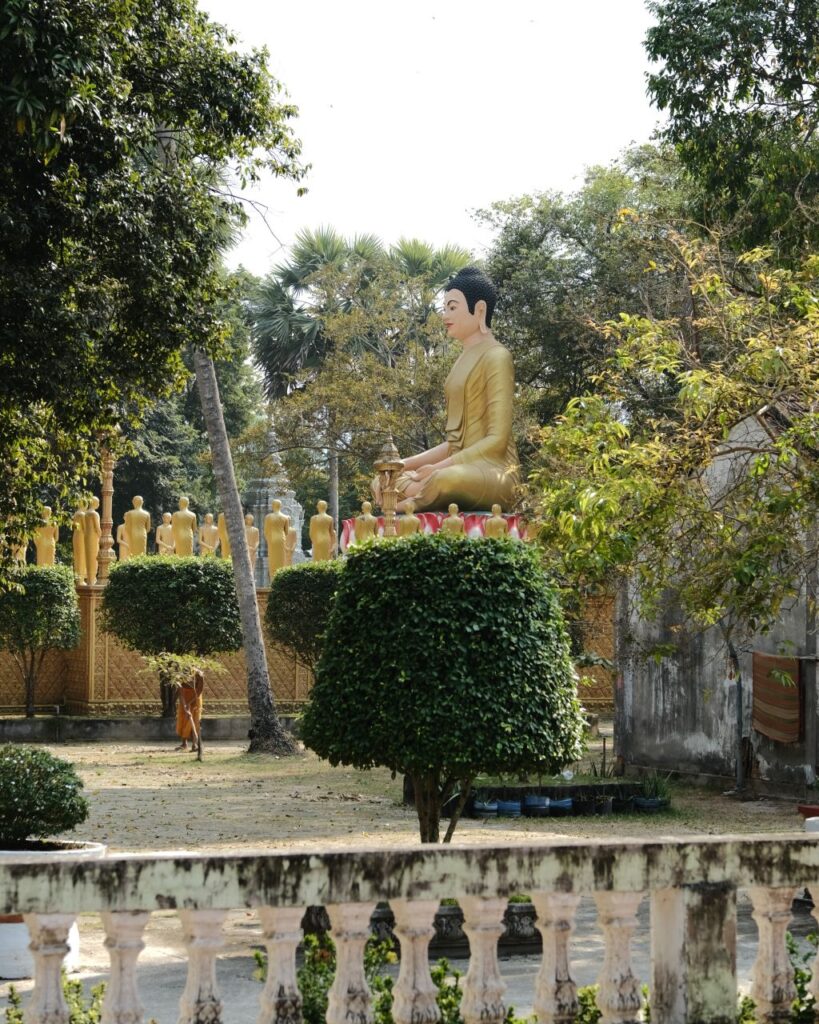
Close to the Cambodian border, Tịnh Biên feels subtly removed from the rest of the Delta. Khmer is spoken as naturally as Vietnamese. Temples follow Khmer architectural traditions. The landscape opens into rice fields, low hills, and endless rows of palms that define the horizon.
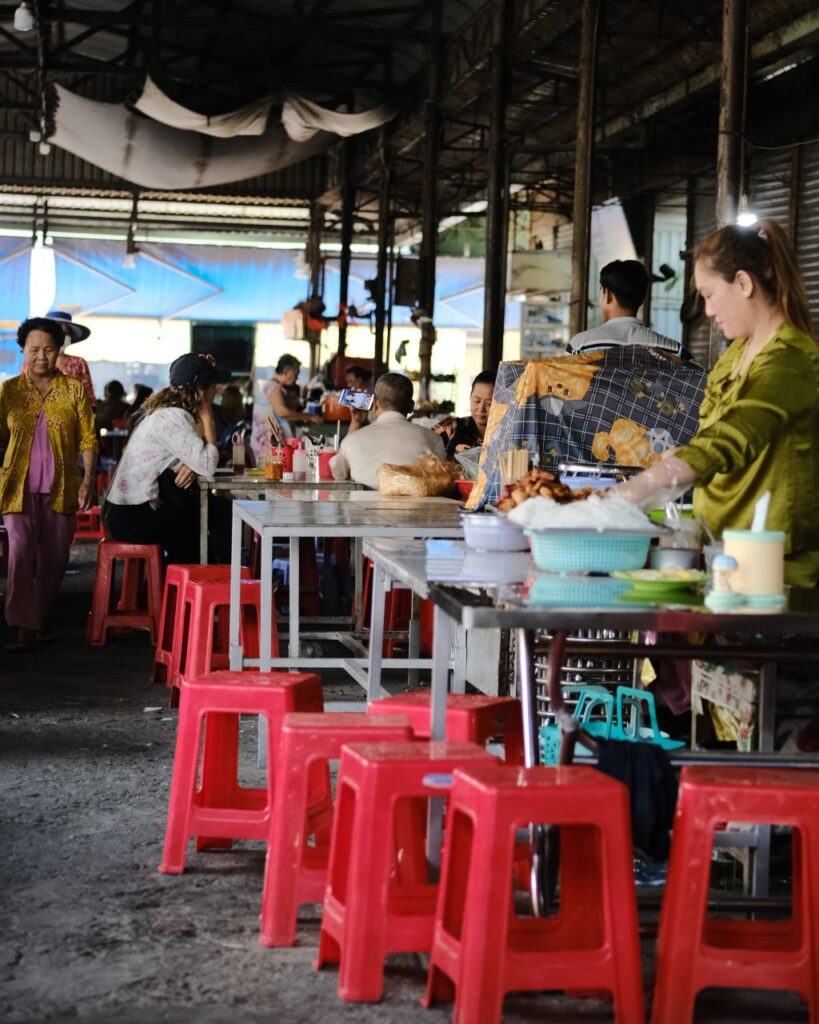
There are no headline attractions competing for attention. Instead, the experience lies in the everyday: morning markets, unhurried meals, long motorbike rides through village roads. For travellers drawn to slow travel in Vietnam, Tịnh Biên offers something increasingly rare: the chance to stay long enough for a place to reveal itself.
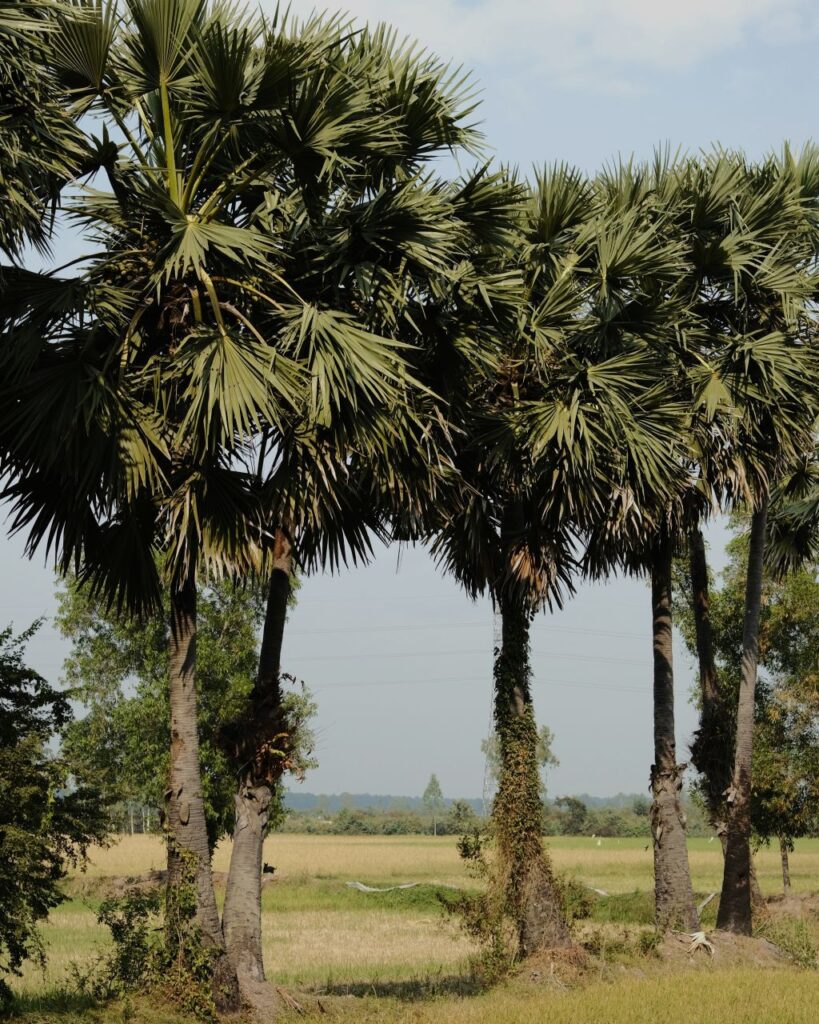
In Tịnh Biên, the palmyra palm is not ornamental. It is essential.
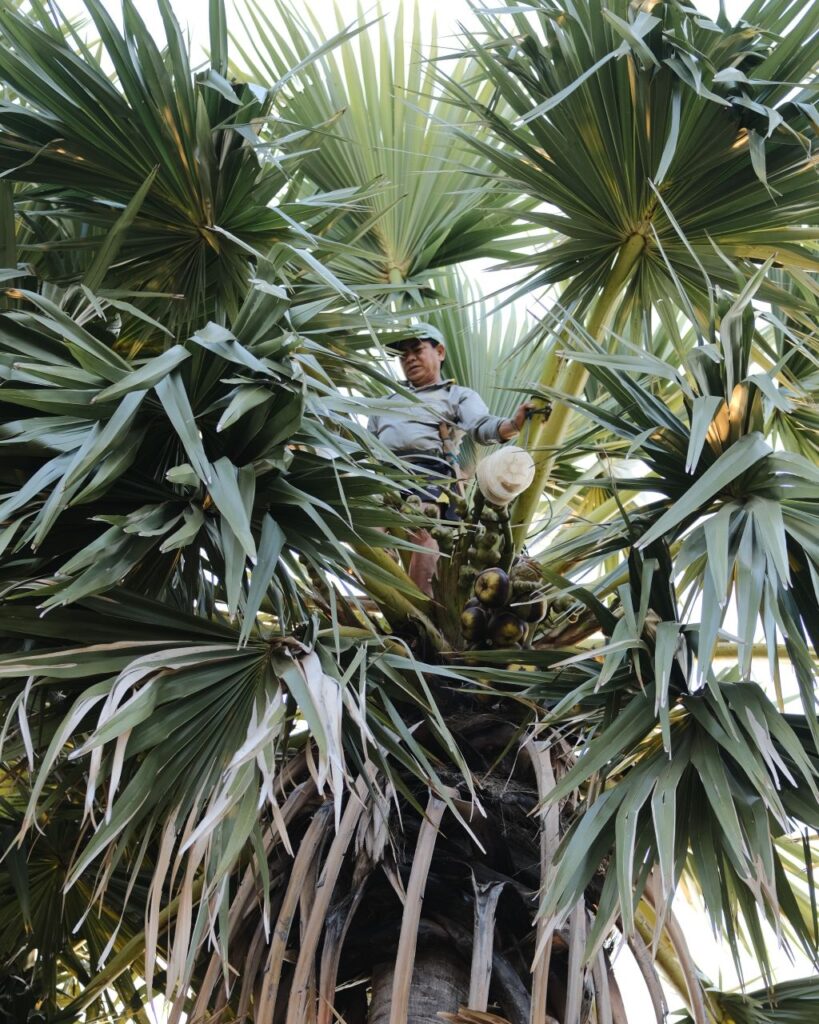
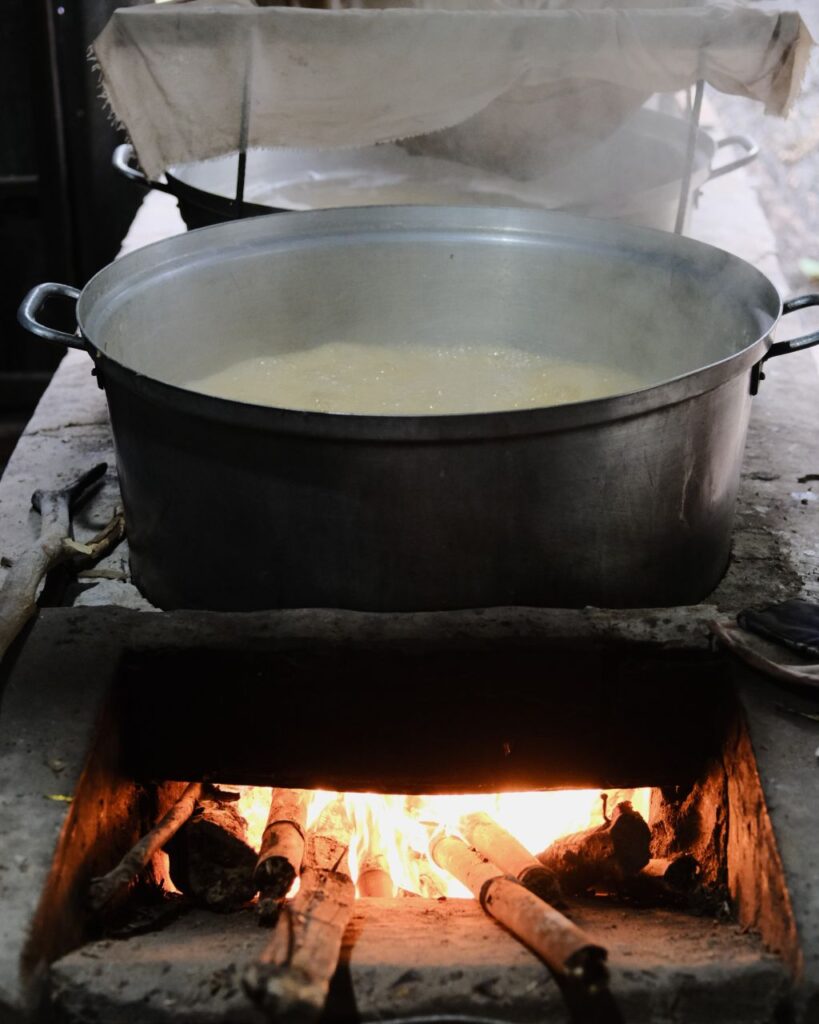
At first light, farmers climb the trees to collect fresh nectar, repeating a routine passed down through generations. By mid-morning, that clear liquid is already simmering over a wood fire, slowly thickening into palm sugar.
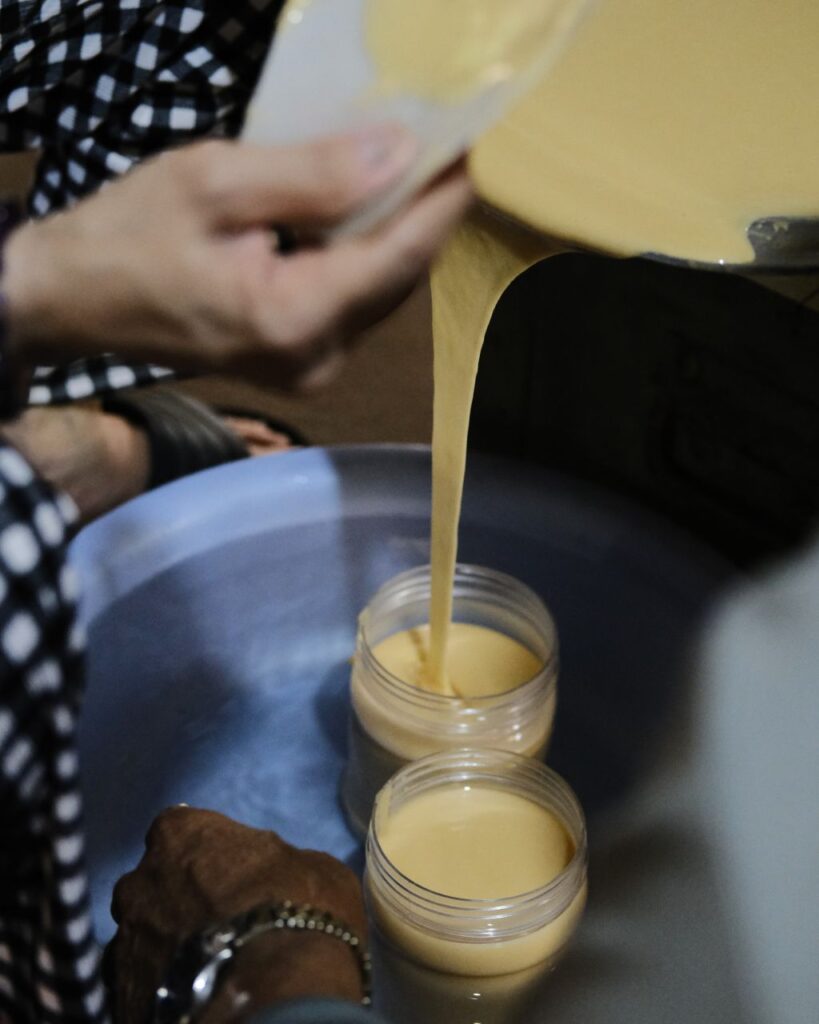
At Lò đường thốt nốt Út Quý, a family-run producer, the work remains largely done by hand, though in recent years a machine has eased the long hours of stirring. The air carries a faint sweetness, threaded with the scent of burning wood and eucalyptus leaves. The color deepens gradually as the nectar is stirred, concentrated, and shaped.
The result is palm sugar with a gentle sweetness and creamy texture, used daily in cooking, desserts, and coffee.
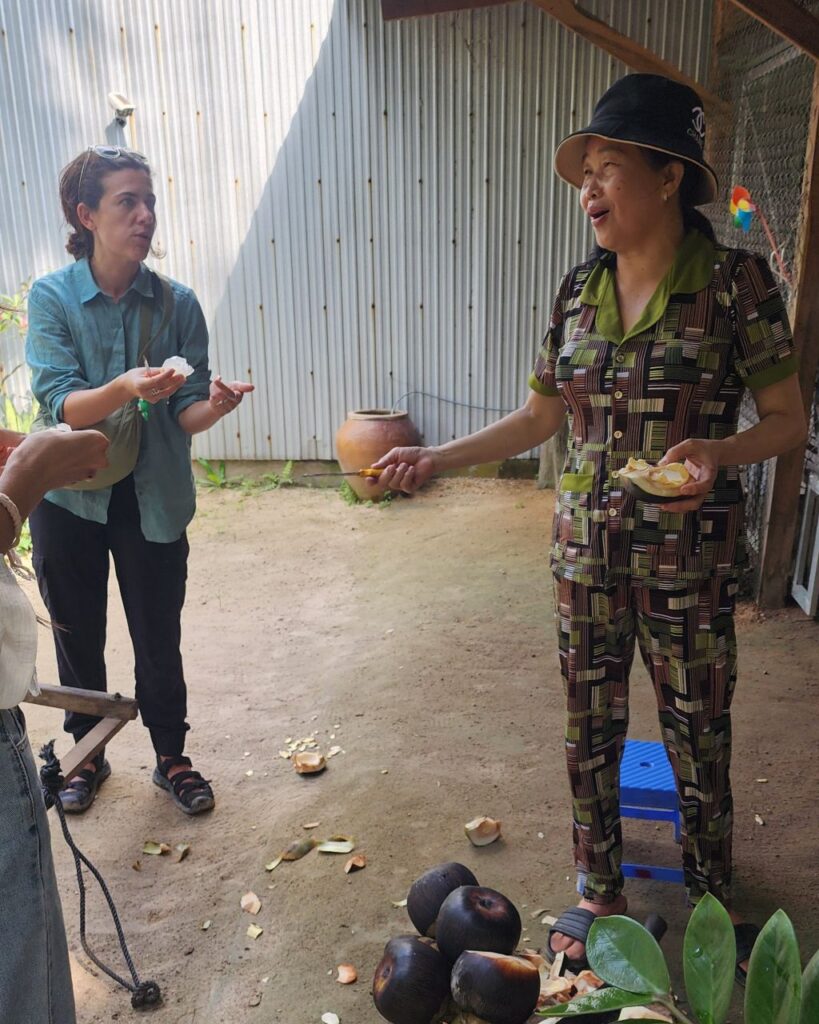
While the sugar thickens, fresh palmyra pulp is shared. Cool, jelly-like, and naturally sweet, it offers relief from the heat of Tịnh Biên. Larger and juicier than water coconut pulp, it is enjoyed fresh, added to chilled drinks, or folded into chè.
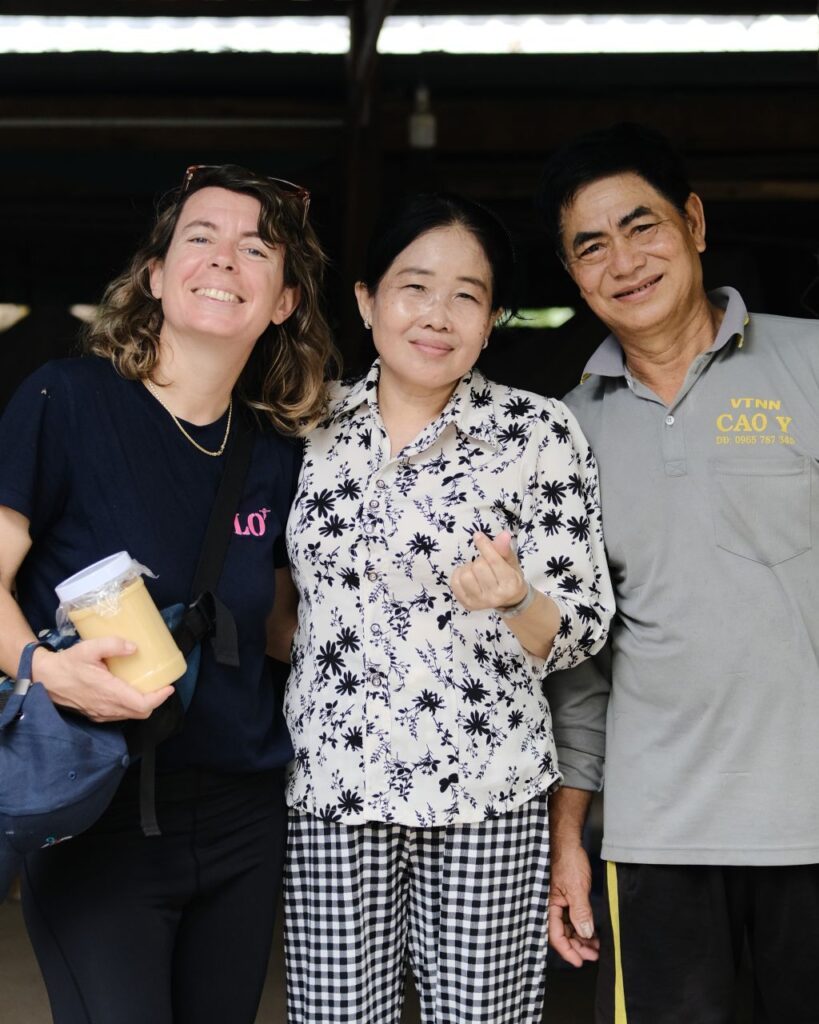
You savor it while listening to Mr. Danh, who has spent more than thirty years producing palm sugar in An Giang alongside his wife. Now in his sixties, he climbs more slowly than before, but the technique remains precise. His quiet optimism is immediate, something you sense within minutes of meeting him.
And the story of the palm does not end at the sugar house.
Palmyra sugar doesn’t only sit in jars.
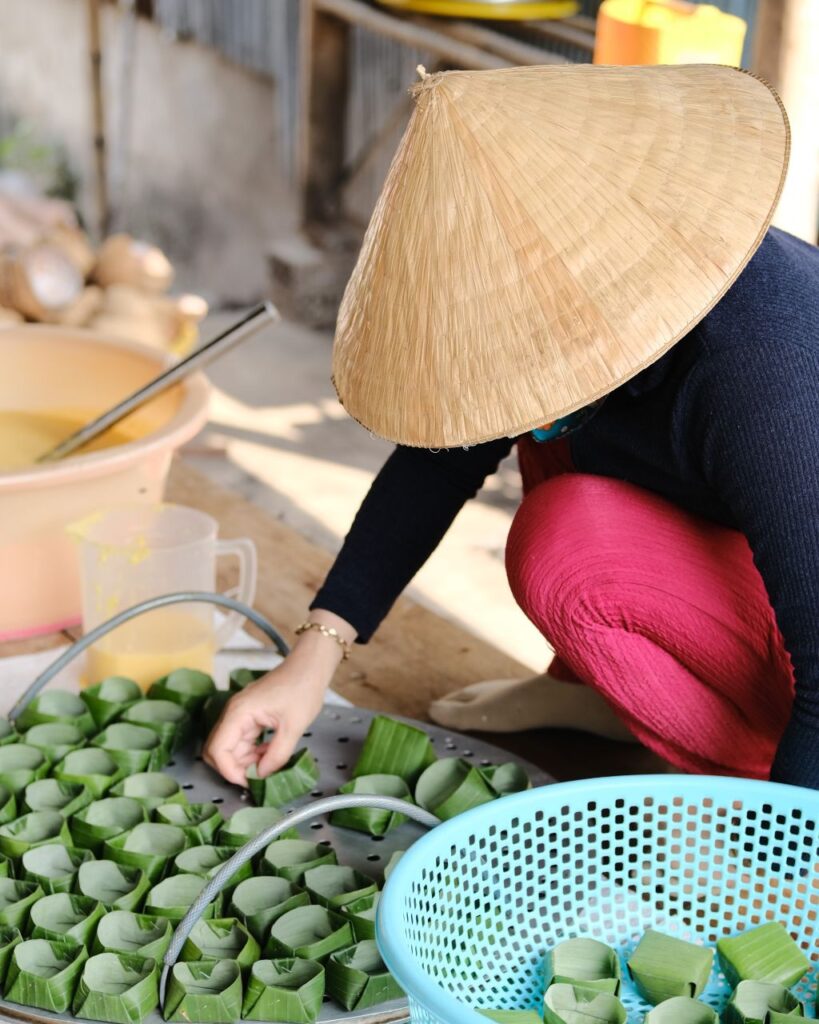
In a nearby village, a modest family home becomes a kitchen each afternoon, where bánh bò thốt nốt, An Giang’s palm sugar sponge cake, is made in small batches. Batter is poured into banana leaf moulds, folded carefully by hand, then set over steam.
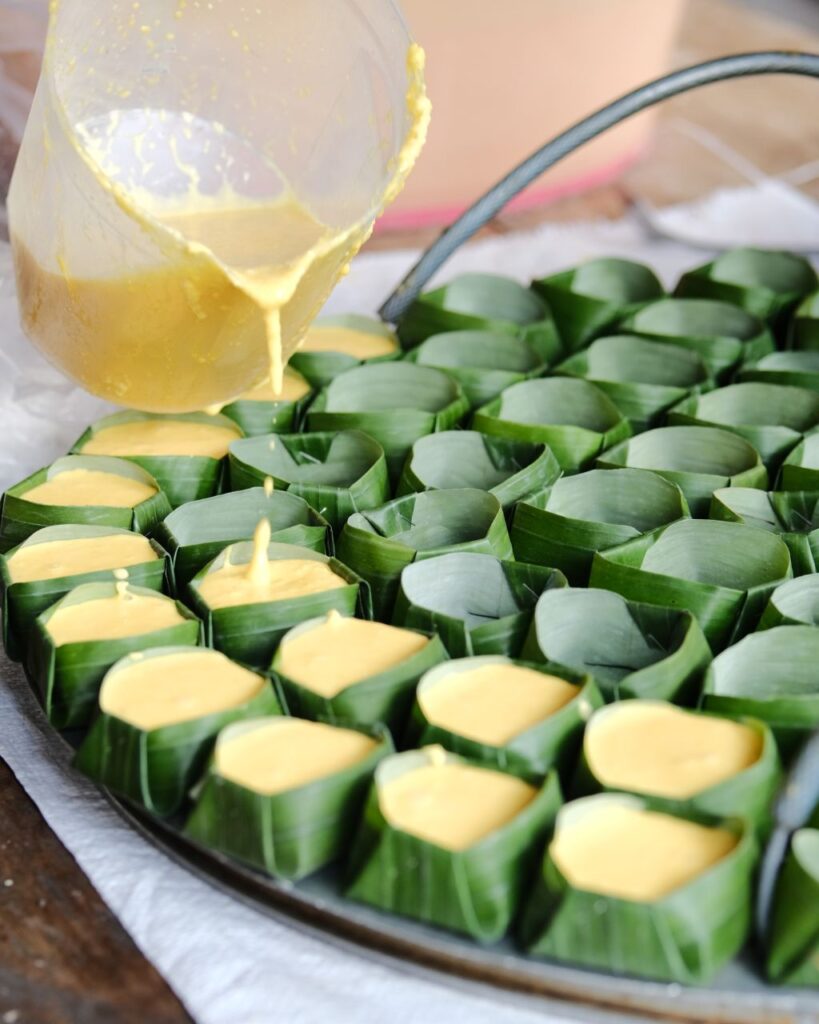
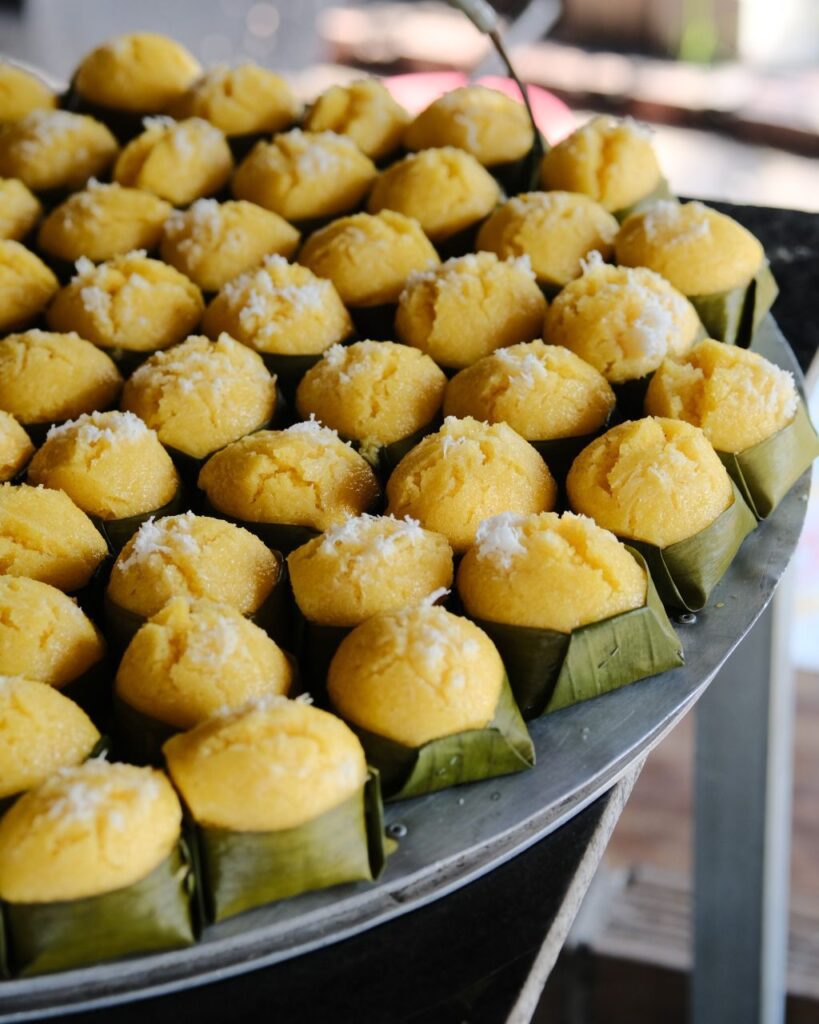
As the cakes rise, the space fills with warmth and the natural fragrance of ripe palmyra fruit. The colour develops on its own, a soft, unforced yellow. Lifted straight from the steamer, the cakes are light, gently springy, and best eaten where you’re standing.
It is another quiet expression of the same tree. From nectar to sugar, from sugar to cake, this is Khmer palmyra palm culture woven into everyday life, shared without performance.
To experience Tịnh Biên properly, staying matters as much as seeing.
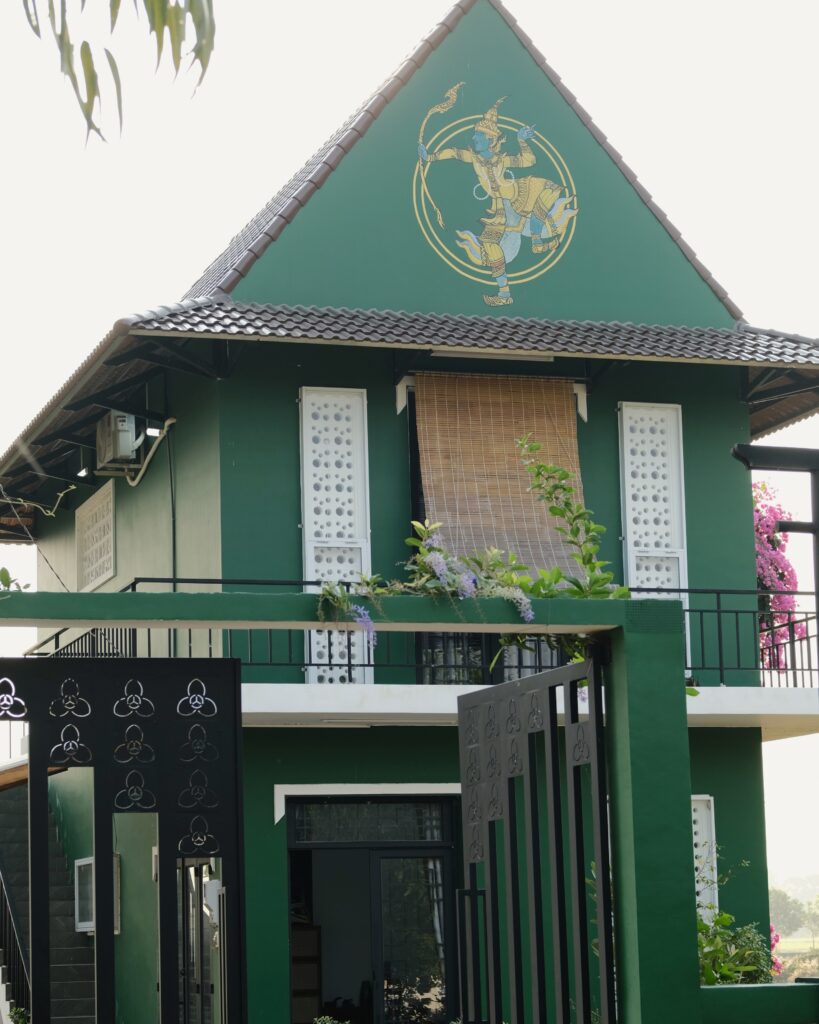
Trí, a local guide and homestay host, chose this place deliberately. He built his home here, learned Khmer, and embedded himself in village life. Palmyra palms stand just beyond his garden, and neighbors move in and out of view as they always have.
His home is best suited for solo travelers, couples, families, or small groups of up to four. The scale is intentional. Trí keeps guest numbers low because the experience depends on interaction – shared meals, conversations that unfold naturally, time spent together rather than managed.
He limits the pace, not the depth. With fewer people, stories surface naturally. A motorbike ride becomes a conversation about local culture. A market stop turns into something more personal. For Trí, hosting is not a service. It’s a relationship shaped over a few unhurried days.

Tra Su Cajuput Forest, just outside Tịnh Biên, reveals its character best in the late afternoon.
Boats move quietly through flooded forest as the heat softens. Birds gather overhead, and reflections deepen as the light shifts.
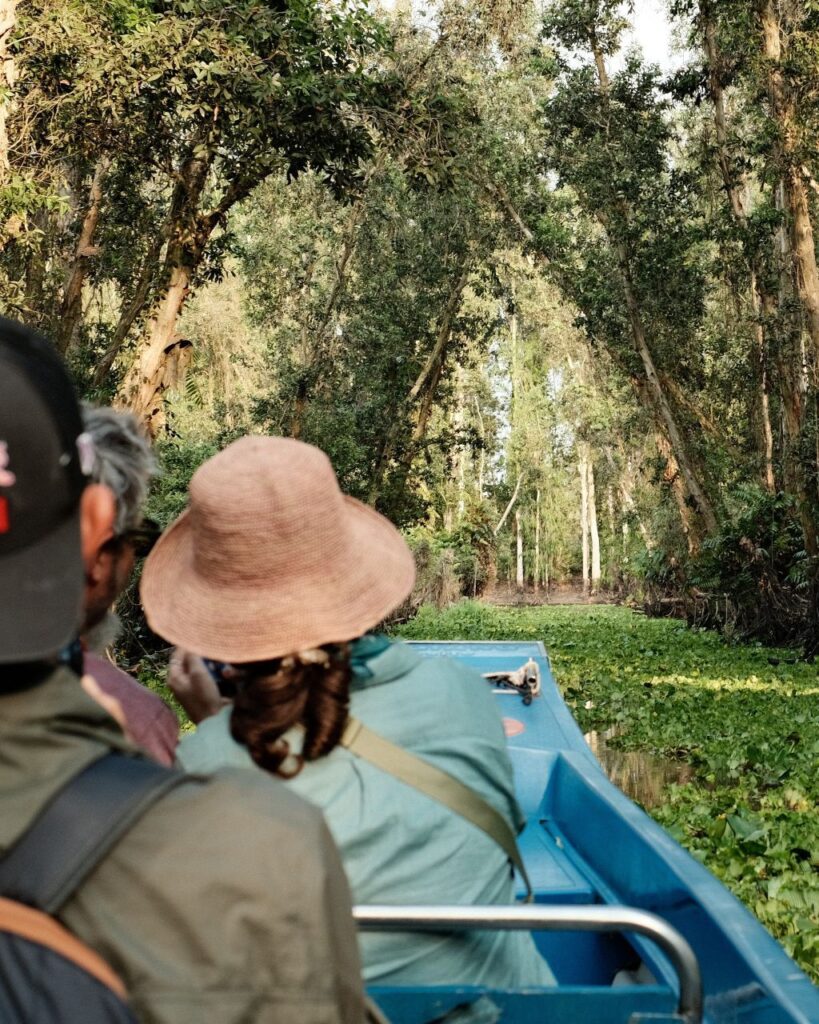
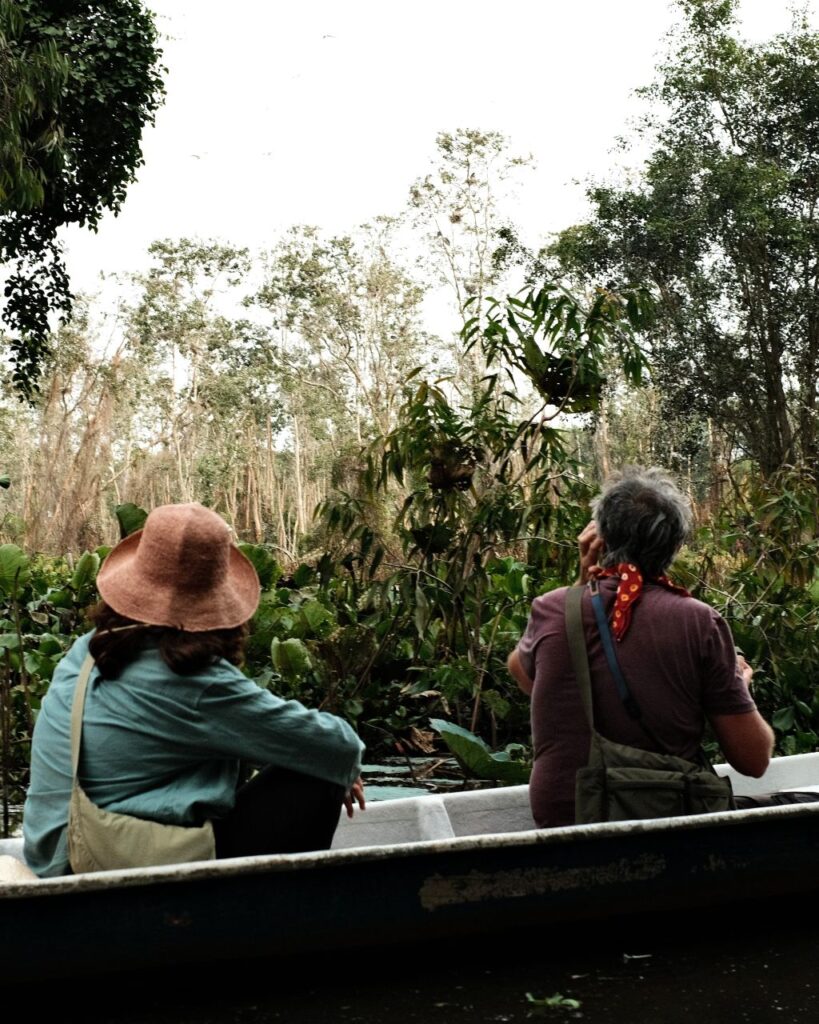
From the observation tower, layers of green and water stretch outward, settling into stillness. The protected ecosystem of Tra Su Cajuput Forest plays a quiet but essential role in An Giang’s biodiversity, best appreciated without rushing through it.
Tịnh Biên doesn’t replace floating markets or river life. It rebalances them.
For travelers who begin in Ben Tre or Can Tho, spending two or three nights in Tịnh Biên shifts the journey’s rhythm. Movement gives way to stillness. Observation replaces urgency. This is what makes Tịnh Biên a meaningful alternative Mekong Delta itinerary, one designed for travelers who value time, continuity, and depth over highlights.
If you’re considering how much time the region truly deserves, this perspective may help: 5
👉 5 reasons to spend more than one day in Mekong Delta
The dry season, from November to May, is ideal, particularly during palmyra nectar harvesting. For broader planning, see:
👉 Best times to visit Vietnam
Tịnh Biên doesn’t perform for travellers. It waits.
Among palmyra palms, Khmer villages, and quiet forest paths, travel becomes less about collecting sights and more about understanding a place as it is lived. It suits travellers who value connection over convenience, and stories over spectacle.
At Chôm Chôm Travel, we design private journeys that allow places like Tịnh Biên to be experienced at the right pace with trusted local hosts, small groups, and time built into the journey.
If this slower Mekong story resonates, let’s talk.
send us your request


© 2026 Chôm Chôm Travel All right reserved.